Tuesday, February 10, 2009

Who are the People in Your Neighborhood?

I was a little surprised to see this over at Grognardia:

There can be no nameless NPCs, not even the guy at the general store who sells you iron spikes and bullseye lanterns. He needs a name, a personality, and at least a hint of a life outside of his interactions with the PCs. All of that is the stuff from which future adventures can be written and are every bit as important as stocking your megadungeon.


I can't say why this surprised me, but it did. I've been playing this way for decades now, allowing the PCs to build personal webs of association and alliance (and antipathy) with the people who live and work and love and fight around them. It makes the world feel more real, it gives the PCs something to care about and allows me to craft conflicts that the players will actually be interested in.

Poor Oddysey got a session-full of meeting the locals last Thursday. It started with her making this observation: “I continue east, though with the luck we've had so far, civilization will consist of a horde of angry bandits or something.“

She wasn't far off the mark. East of where they washed up was a hidden cove where a large gang of pirates had built their base. The good news was that most of the pirates were away on their ships, pillaging and plundering and all of that. The bad news was, that still left over a hundred women, children, and semi-retired pirates to hold down the fort. More than enough to handle a dwarf all on her own on a strange shore.

After skillfully dodging the small scouting party sent to investigate the funeral pyre the heroes had lit the day before to consume the body of a fellow traveler slain in the storm that shipwrecked them, Oddysey's dwarf came upon the base itself. Now, I'd envisioned the party maybe trying to steal supplies from the pirates, or just going around them, pushing deeper into the jungle to avoid being seen (and quite likely stumbling upon jungle-dwelling kobolds in the process).

Players, of course, never do what you expect. Rukmini marched right into the village and asked if she could have some water and maybe trade labor for a place to stay.

Yeah, I should have seen that one coming. She had no idea they were pirates; it's not like they had a big sign over the place saying “Seekret Pirat Baz” or something. And maybe Oddysey had read about the influence of Anne McCaffery's work on my campaigns. Regardless, Rukmini got to meet Myret, matriarch of the base and de facto leader while the captains are away, work with Jebin the peg-legged blacksmith, and get a promise from his grandson Kip to teach her the rudiments of sailing.

Now, Labyrinth Lord, like Moldvay/Cook Basic/Expert before it, doesn't come with a built-in skill system. But Rukmini is a dwarf with a family background in brewing. So it made sense to say she could help Jebin repair a few broken machetes and other iron tools, as well as do a bit of work on their still. It also made sense that she wouldn't know much about sailing. No rolls were made on any of this. They simply were not needed. The smithing was very basic stuff, just minor repairs that any apprentice should have been able to handle on their own. And, after a brief '80s style montage, Rukmini will have mastered the basics of sailing and will have increased her knowledge of knots, weather, seabirds, fishing, and the like.

Finally, she helped the locals fend off an attack of angry snappers, aggressive turtle-humanoids, so it wasn't all drinking rum and singing sea-chanteys. (The village, by the way, got very luck in that attack. Two-dozen snappers should have been enough to level the place, but they rolled poorly and attacked without any sort of organization. Which is probably just as well.)

Next week, we'll start the game with Rukmini working with the pirates. Just how strong that relationship is remains to be seen. The dwarf brings some useful skills, but can she be trusted? And is she ready to trust a bunch of pirates? Only time will tell...

Friday, February 06, 2009

Fairytales and Hamsters

I've just added a new blog on the list to the right: A Hamsterish Hoard of Dungeons and Dragons. I'm not quite sure what the adjective "hamsterish" means in this case, but I do find the content very interesting. It's new goodies for BECMI/Rules Cyclopedia D&D, primarily monsters, but sometimes spells or other treats.

That would be neat enough on its own, but I'm also intrigued by a theme I'm noticing in the recent posts. I have no idea if this is temporary, or even a conscious decision on Taichara's part, but where most of us playing with older versions of D&D are embracing a more Swords & Sorcery motif, or wallowing in Dark Fantasy, Taichara's creations have a strong fairytale feel to them. Here's an example of a new magic-user spell that illustrates what I mean:

Vine Truth
Range: 0
Duration: 1 turn
Effect: One conjured flower for divining truth


This spell produces a small coiling vine that wraps around the wrist of the Magic-User, ending in a showy blossom held between the fingertips. Until the spell's duration runs out, if an individual within 30' of the Magic-User knowingly tells a lie, a petal will fall from the blossom to signal the untruth.


And check out this description of the thorn dragon:

Their name comes from their scales: mottled brown and rust-red, edged in green and rose -- and each one's tip drawn out into a long, curved thorn.


I can't quite see Frazetta illustrating this beastie, as most of his monsters tend towards the smoky and dreamy, and glisten wetly. But I could certainly imagine what one of the Pre-Raphaelites might make of it.

Thursday, February 05, 2009

Romance, Sex and D&D: the College Years

(Part One of this series is here.)

Things changed radically in the game I ran in college. My college crew was probably the best group I've ever played with. Their skill at the game was exceptional, their styles (mostly) meshed very well with mine, and their interests took the game in directions I'd never considered before.

The biggest difference, I think, came from the girls outnumbering the guys. Most of them were already very familiar with 2e (this was the early '90s) and at least a few of them had experience with 1e as well. They also came from different literary traditions. The guys I played with in high school were fairly avid readers, and we'd enjoyed most of the same books: Tolkien and Brust, Moorcock and A Young Boy's King Arthur, Lovecraft and Rosenberg. We were not nearly as steeped in “the classics” of the Old School as some (I didn't read any Lieber until college), but we had our literary models and struggled hard to bash D&D into a shape that could play them, as the whim took us.

The ladies of my college game brought a different literary background with them. They shared a number of the classic influences like Tolkien, but added names like Bradley, Hambly, McCaffrey, and Lackey. I'd read from a few of those names before, so I had some ground to stand on there, but what really rocked the boat was what they brought with them from romance novels.

Romance is the number one selling genre in bookstores. It dwarfs even combined sci-fi and fantasy sales. Today, most nerds have a passing familiarity with the conventions of romance, thanks to folks like Joss Whedon, Stephenie Meyer, and the emergence of paranormal romance, which have brought them more into the mainstream (or, at least, what passes for mainstream among nerds). It wasn't so much the case back then, but the process had already started.

Gents, if you haven't cracked the cover on a full-blown romance novel, understand that you are missing an entire world of story structures out there. Romance novels have their own styles of pacing and conflict, an entire vocabulary of emotional states and expected conventions for their ebb and flow. And these books are not the halcyon daydreams you might imagine they'd be. Your female junior high classmates were reading books chock full of all the topics you've been taught to avoid in polite company: rape and incest, blackmail and character assassination. Yes, some are light-hearted romps, but others delve into a level of brutality that might even eclipse the other Brian Murphy's Top 10 Fantasy Battles list. (The historical romances tend to be the worst. I read one based on the life of William Shakespeare which described in agonizing detail the experiences of a character who is buried alive.)

So when I knocked down the walls and, in effect, announced that the campaign was sandbox-style (though we didn't have that vocabulary back then), sex and romance took prominent roles in the game. No longer relegated to a few laughs while we celebrated in town between adventures, time and effort and detail were expended on pursuing or luring the opposite sex. What are his interests? What is his favorite color? What sort of women does he prefer for marriage, and what sort for a tumble in the hay? What is his favorite scent?

And we went very Old School with this. The dice nearly disappeared as we played out the give-and-take of romantic conflict, a conversation of blades played out with social conventions, fashion, politics, and raw sex appeal. (Anonymous, this is a critical point in understanding the difference between 4e and Old School play. In 4e, this sort of thing might be boiled down to a single skill roll, or perhaps a skill challenge. Was the way we played it out time consuming? Absolutely. But “non-fun”? Oh, Hell no! Detailing the outfits and buying the presents and planning the parties was the fun! But I'll have a more detailed post on the topics you bring up over the next week or so.)

We still rolled for pregnancy, but now some of the PCs were trying to get knocked up. Issues of fertility, birth control, and motherhood came into the game. What do elves, who have so few children, think about a mother or father who leaves an infant with family in order to save a human city from destruction? Can a polymorphed dragon get a human woman pregnant? What happens to a pregnancy if the mother drinks a potion of speed? What if she contracts lycanthropy?

Anything and everything was pretty much fair game for that campaign. Some of the PCs were bisexual and others strictly hetero. Some eagerly played the field while others sought exclusive relationships. Virginity became a noteworthy (as in, we noted it on the character sheets) stat as we played with ideas on why dragons and unicorns find it important. And we explored topics that would make Carcosa look like a Sunday School coloring book. (For example, near the end of the campaign, one of the PCs ended up marrying the arch-lich Vekna for political reasons. But that's a whole story in itself...)

Keep in mind that none of this was the primary focus of the campaign. The PCs still foiled the plots of scheming wererats, battled orc raiders, dared the hidden fortresses of necromancers, and slew dragons. They played an important role in returning the rightful High King to his throne. They hoarded treasure and leveled up. The campaign lasted for years, even beyond our graduations from college. Level limits were reached and railed against. Orcus was slain on his home plane and a god was destroyed. It was D&D in every way that anyone who has played the game would instantly recognize. But it also warped into something so very much more than the ordinary.

Tuesday, February 03, 2009

Romance, Sex and D&D: the High School Years

James Edward Raggi IV (who has the most fun name to say in all of gamingdom) recently waxed verbose on the topic of Sexuality and D&D. He then invited comments on the topic, posing a handful of interesting questions. Of course, mention was soon made of the juvenile antics of teen boys playing the game, which made me think of the halcyon days of my own youth. And that made me question certain assumptions about our gaming from those days.

The assumption appears to be that sexuality is played as a lark and a joke, and works to further the power fantasies of young men with easy conquests of exotic beauties. Much could be written about that, but, at least in our case, it wasn't true, and judging by some of the stuff I've seen on the 'net, it wasn't terribly true for others, either.

First of all,yes, romance was all but non-existent. When it did happen, it was between NPCs, and was the subject of much lampooning and MST3King (long before there was an MST3K). And yes, it was all about casual romps (“hook ups” as they call 'em these days) and yes, it was pretty much governed by a series of dice rolls. But the results of those rolls bear a bit of investigation, I think.

First was the seduction roll. Do you manage to sweet-talk the object of your affection into bed? (We had one female player in those games, so it wasn't always the barmaid or Duke's daughter being wooed.) Sometimes that was followed by a roll which described the quality of the experience. But after that came an entire series of rolls that just invited disaster. Rolls for disease, rolls to see if she got pregnant, followed by a roll to see if you woke up alone with all your coin or a random magic item stolen.

Sex, in short, was dangerous.

And this pretty much mirrored how we saw it back then. Like delving into dungeons, sex was thrilling and risky, a matter for much preparation and planning, but to be tackled with swashbuckling abandon and enthusiasm. The rewards were found primarily in the daring of the deed rather than any outcome to be expected from it. It was hardly the stuff you'd assume to find in male teenage fantasies and yet it fit the character of our games perfectly. Maybe it was the risky nature of the games we played back then, or just something about the '80s that shaped the character of our games. Maybe it's different today?

Friday, January 30, 2009

Dawn Treader to Sail After All

AICN reports that Fox is picking up where Disney left off in the Narnia series. However, it's not all sunshine and roses:

I’m sure many will share my level of excitement as the studio behind “Eragon” is now helping to steer the adventures of the plucky Pevensie clan.

The first Fox entry in the saga will be “The Chronicles of Narnia: The Voyage of the Dawn Treader.” Fox and Walden are aiming for a $140 million budget, considerably less money than was employed by the two Disney chapters.


I'm cautiously optomistic, considering how much fun the first two were.

Sunday, January 25, 2009

John Carter of Mars News from AICN

"Quint" of AICN has posted some "John Carter of Mars" news from the Santa Barbara Film Festival:

I was able to attend a luncheon before the panel and sat with Tom McCarthy and Andrew Stanton. Of course John Carter of Mars had to come up. He also elaborated on the panel, but here’s what’s going on with JOHN CARTER OF MARS:

- It is live action.

- “It is huge, it is exciting, it scares the crap out of me. It’s either going to make me or break me.”

- It is NOT a Pixar movie, rather a Disney film. However Stanton’s creative team from Pixar are all still involved.

- The style is going to be very real, not highly stylized. He said that 20 some years ago that version could have been made, but since Star Wars and a whole glut of science fiction and fantasy films have ripped off giant portions of JCOM over the years the only option he sees is doing a straight up, realistic version of the story. He described it as if it was a National Geographic crew that stumbled across a preserved civilization while exploring a cave. Very real, but awe-inspiring.

- He is not planning nor wanting to shoot it 3-D (thank God… I love James Cameron, and I think AVATAR is going to be amazing, but I’m getting tired of every big event movie being 3-D), but thinks Disney might want to push him towards it.

- Stanton has been a fan of Edgar Rice Burroughs since he was a kid, so while he won’t have the same kind of development time on this one as he had on his animated movie he looks at it as him living with the story in his brain for 40 plus years instead of the 6-8 of his animated films.

- He has his second draft done and will be casting soon.

- John Carter WILL be a Civil War soldier.


He's got more on general screenwriting and like topics from the festival.

I Wanna Story...

This started as a reply to Aaron Nuttall's latest post on his blog “Like Being Read to From a Dictionary”. Like Mr. Nuttall, I'm always sticking in story where it doesn't belong. I'm the guy who loses a game of Settlers of Catan because I start thinking about how the farmboy in my second village, named Chatterins, is pining for a wealthy burgher's daughter in my first village, now a city called Umberlin, while she secretly plots her revenge against the Black Baron who killed her favorite uncle... And suddenly Kimm has the longest road and wins the game.

I love board game night, but I'm not sure why the others let me play with them. Maybe because I don't win?

Anyway, Aaron is running into similar trouble with his Old School Swords & Wizardry game:

The problem with this in old-school play--or any play, I suppose, where the characters haven't got "plot immunity"--is that the characters are going to die. A lot. If they're no longer around to carry your plot threads what happens to your game?

It fizzles, stumbles, stops. Or, that's what happened last night. So what I have to figure out now is how we can think about the PCs and their roles in the game so that their deaths don't hollow out the whole affair--so that there is something left behind when a character's motivation is lost.


I don't think you need to toss story overboard when you're playing an Old School game. What I do as DM is adopt a more reactive role. To do this, you have to let go of the reins, stop trying to craft the story, and instead be the little kid in your footie pajamas saying, “I wanna story with a witch and a troll and a gerbil princess!”

Or you can think of yourself as Drew Carey in the American version of “Whose Line is it Anyway?” You throw a bunch of props and situations on the stage, then sit back and laugh as the players entertain you. ;)

The key is to give up any semblance of “directorial control”. You're not the author, you're the instigator. You set things up, but the players create the story from the bits and pieces you've left laying around for them.

The old adventure B2 – Keep on the Borderlands is a classic example of how to do this. The area described by the module includes the Keep, a mad hermit, some bandits, and the Caves of Chaos. The Caves themselves are a sprawling mish-mash of different humanoid and human threats, most inimical to one another. The entire module describes a terrain rife with conflicting interests and goals, with various groups on the verge of violence against one another. It's like a giant pile of fireworks doused in petrol. And into this volatile environment, you unleash the PCs to wreak havoc and chaos.

Your job as DM in this sort of thing isn't to make sense of the PCs actions, or to plot out arcs of rising and falling action. You instead focus on your characters, the NPCs, and how they react to what the players do to mangle the NPCs' carefully cultivated status quo or clever plans. Some may try to recruit the PCs. Others may try to kill them. Maybe they'll try to send the PCs to savage their foes, either by bribery or trickery. Maybe they'll turtle, hoping the storm raised by the PCs will pass, or maybe they'll try to run away. What the NPCs will do should probably depend rather heavily on what the players do. Usually, a disaster for one faction is a boon for another. Since you don't know what the PCs are going to do yet, you have to pretty flexible, ready to think on your feet and shift direction at a moment's notice.

And yes, the results might be a nasty mish-mash that doesn't look anything like a traditional story. And that's not necessarily a bad thing. The goal, as always, is to have fun. You and the players work together to find out what happens. They are not passive recipients of story and neither, really, are you. Chaos and uncertainty will be rampant, but because the story is greater than any one character, you don't need to worry about granting anyone plot immunity. As in the real world, the cemeteries of your fantasy realms will be full of “indispensable” folks. The loss of one is just another random bit of chaos, certain to change the plans of everyone involved.

Saturday, January 24, 2009

Playing with Hit Points

As an introduction to his tinkerings with armour class, Matthew Stanham of Silver Blade Adventures has quite a bit to say about the vagueness of hit points:

In fact, the truly abstract nature of hit points allows the game master the freedom to determine the extent to which realism will be a concern. When a character loses twenty of thirty hit points to a single attack, it is up to the game master to describe the event, and also to decide if there are any effects beyond their loss. To put it simply, the value of the abstraction is in its ambiguity.


I've tried to embrace this vagueness in my Moldvay/Cook/Labyrinth Lord hack game, starting with my own riff on Robert Fisher's Classic D&D Injury Table. But a lot of these little details depend on how you play the game, especially in a text-chat game.

One source for the assumption that every roll of the d20 represents a swing of your character's weapon comes from what we call that roll: a to-hit roll. Right there, I think, is the source of most of our assumptions about "swings" and how hit points are a measure of physical trauma and the like. I can't do much about the decades of labeling TSR and WotC have used, but when I gaming I try to remember to call it an attack roll, and not a to-hit roll. It's a little thing, but I hope it helps to set the right tone and expectations.

I take this same attitude to describing what happens in a fight. Here's an example from Thursday night, when our heroes faced off against a pair of massive, turtle-like humanoids:

The second, smaller creature hisses angrily as it charges at the human. It stabs at him with its spear, again with surprising speed and dismaying strength, and it's all Maythur can do to ward off that sharp flint point with his shortsword. (Maythur loses 2 hit points.)


Again, I don't talk about gashed wounds or near misses. This is ten seconds of combat, a series of dodges and ripostes, feints and slashes. And my models, as much as is possible, are the pulp greats of yesteryear, such as REH:

Her sword darted past a blade that sought to parry, and sheathed six inches of its point in a leather-guarded midriff. The man gasped agonizedly and went to his knees, but his tall mate lunged in, in ferocious silence, raining blow on blow so furiously that Valeria had no opportunity to counter. She stepped back coolly, parrying the strokes and watching for her chance to thrust home. He could not long keep up that flailing whirlwind. His arm would tire, his wind would fail; he would weaken, falter, and then her blade would slide smoothly into his heart. ("Red Nails" - 1936)


The danger with this sort of thing is being too vague. Does the following passage convey that the turtle-man has lost more than three-quarters of his hit points?

Rukmini's attack blindsides the enraged turtle-man, and her first strike bites deep. Within moments, it is now on the defensive, fending off attacks from both of you. The creature, however, seems to go into a berserk rage, slamming its bulk into the dwarf in retaliation and slashing at her with it spear. (Rukmini loses 5 hit points.)


The nice thing about numbers is their lack of ambiguity. Everyone can tell the dwarf is hurting, and just how badly. But I don't think it's very clear that her foe is on his last legs, but one more strike away from death. This is one of those things that constantly challenges the DM in a game like this, and you have to always be honing your technique and varying your style, both to keep things fresh and find new ways to convey what's actually going on, without allowing things to devolve into "You miss, it hits for 5, you hit, roll damage..."

Thursday, January 22, 2009

I Was Drowned, I Was Washed-up and Left for Dead...

Huzzah! Bang the drum and sound the trumpet! My Moldvay/Cook/Labyrinth Lord hack game finally got started on Thursday night. I'll leave it to the players to decide how much of a success it was. I certainly had fun playing with them. (And yes, there are still spaces available. Email me at trollsmyth-at-yahoo-dot-com if you can play between 7 PM and 11 PM Central time on Thursday nights.)

Starting a sandbox game is always a challenge. It's too easy for the group to be paralyzed by the limitless potential of wide-open spaces. So sometimes it's best to narrow their focus a bit. For this group, I started with a classic ploy from the pulps: a shipwreck.

Nothing too original there, and I'll be the first to admit it. All the great pulp heroes were shipwrecked at least once in their careers, from Conan to Elric to Fafhrd and the Gray Mouser. A shipwreck, though, gives the group a certain amount of direction, without limiting their choices. There are things they must do: find food and water, secure shelter, and find out where the heck they are. Then they need to get back to civilization, if possible, and if they can't, then they need to prepare to live without it.

That all said, their options for tackling these challenges are nearly limitless. They have all the ocean's bounty, plus whatever can be found on the land they've washed up on. Do they fish? Try to build a new boat? Strike inland? Hug the shoreline? Do they build a sturdy shelter, or just scavenge enough bits to make minimal but portable shelters? Do they light a signal fire and hope help finds them, or do they try to remain unnoticed? It's the best of both worlds: survival demands they focus and work together, but doesn't dictate their actions. There are choices to be made, and most of them are of the common-sense or creative-thinking sort that don't require dice rolls, which is perfect for Old School play.

Still, mere survival is not the stuff adventures are made of, so you need to be sure you've got a little something fantastical nearby, to remind them that this is a world of mystery and magic and danger. The shipwrecked heroes of the pulps didn't have to wander far before they found a new adventure to challenge them, and your players shouldn't, either.

So there we are, shipwrecked, with their first foes defeated and their first treasures looted, though not without some hit points lost. And, oh dear, the cleric didn't survive the shipwreck. We can only wonder what fate (aka their sadistic DM) has in store for them next week...

Wednesday, January 21, 2009

A Bit of Old School Awesome

So after my last downer post on the Old School, how a bit of Old School cool? Keeping in mind Jeff's recent post on destroying artifacts, check out this post at RPG.net from Sac2:

And can you believe it? The paladin is already asking if there is a holy sword there. My response?

"Don't get ahead of yourself. An item like a holy sword is a quest all unto itself, and ye won't be finding one in the temple. And ye certainly won't be able to handle such a quest until you are level 10 or so, and that's with lots of allies."


In my mind I'm already thinking I'll make his quest for a holy sword go something like this:

Go to White Plume Mountain and acquire Blackrazor. Manage to escape the efreets with it, the whole time not touching it. Then travel to the frozen mountain lair of Frostbyte, an ancient white dragon. Get Frostbyte to breathe on the sword and shatter it with a hammer blessed by Foresetti. Take the pieces to the high temple of Hephaestus where a new sword will be forged. Out of pure evil a new sword of holiness will be created.


All in all, the one thing that I forgot about the most about my old skool D&D days? Often one of the members of the party or the party itself will do something that sparks a whole new side adventure and I'll be quick to modify or outright ignore large portions of the module itself. Ah, the way Gary intended....

Tuesday, January 20, 2009

Bad DMing the Old School Way

Badelaire over at Tandards & Broadswords has a few things to say about the dice-are-evil style of gaming:

However, one argument that I will make for this older approach is the old adage that you only take a gamble when the stakes are worth it. In other words, leave to chance only that which you must leave to chance, and find ways of making sure everything else is a "sure thing'. If you can figure out how to find the hidden widget or talk your way past the palace guards without leaving it up to a potentially disastrous roll of the dice, so much the better. It'll require more engagement from both the Players and the GM, but in the end, isn't "engagement" in the game part of the fun?


I certainly agree, but there are hazards to this sort of play, and they're not always obvious. For instance, Darkwing (of Arcadia Prime fame) comments:

If I tell the DM I want to do X, Y, and Z, and he says "doesn't work, doesn't work, doesn't work" it gets frustrating. Even if he intends to railroad me, the act of making me roll to see if I succeed at least provides the illusion that there's a nonzero chance of success.


Yeah, that would be frustrating, but it's hardly the biggest risk you face with that sort of gaming. There was another sort of DM we all learned to recognize and avoid back in those days who were even worse than the “doesn't work” sort. When playing with this sort of unpleasant DM, you'd lay out your idea and the DM would just nod, letting you know that your plan was in action. And then, at the worst possible time, you would find out that something that should have been blatantly obvious to your characters rendered your plan inoperable. Maybe the soft sand of the seaside caves was too weak to hold your tripwire, or the door you needed to keep the minotaur out was flimsy and rotted through. Sometimes this was our fault. We just hadn't been paying enough attention when the DM described the room. More often than not, the DM would simply shrug at our protests and say, “You never asked what sort of shape that door was in.”

There's a fine line between being thorough and pixel-bitching. Itemizing every object in a room and going over it with a fine-toothed comb might be a smart move for the CSI team, but fun adventuring it is not. There's a reason the TV show reduces such scenes to a montage. Sometimes, yeah, it makes sense to pay a bit more attention to the evil baron's desk, or the floor leading up to the ancient altar upon which sits the golden idol. But not every room or door deserves such scrutiny. If there's something that ought to be blatantly obvious to the most casual observer, then the DM should mention it. And if the players seem to have forgotten that fact as they put their plan into action, the good DM will point it out again, making sure they understand the implications for their cleverness.

Note that this is not the same as saying “doesn't work”. Instead, the DM is saying, “so long as this condition exists, your plan won't work.” Sometimes, the players can change things so the plan does work. Sometimes, they'll have to come up with a new plan. But the DM doesn't just say no. And the good DM doesn't smirk behind the screen while something that should be blatantly obvious unravels all the clever thinking of the players.

Monday, January 19, 2009

Trollsmyth Plays 4e

Surely this is one of the signs of an an impending apocalypse, no?

Seriously, I had fun. The occasion was the monthly meet of The Austin Dungeon & Dragons Meetup Group. Nobody else volunteered to run anything, so a friendly gent named Christian volunteered to run a short game using 2nd level characters. Many of us didn't come with characters in hand, and a few of us had no practical experience playing 4e, so the pregens he had were a great help.

Now, I can't call this an adventure. We played for roughly five hours and that was enough time to almost finish two combats. Keep in mind, however, that some of us were very new to the game, and there were nine (!!!) players that poor Christian had to run a game for. So it's certainly not his fault things moved so slowly. I can understand why they say 4e is optimized for parties of five to six. Luckily, I got to sit next to a very knowledgeable and friendly gent who was glad to share with me the tricks of getting the most from my eladrin ranger.

And I'm extremely thankful for his help, because otherwise, I was utterly lost. This was not D&D as I've known it. Keep in mind, this was just a bit of combat versus kobolds and then dragons. We really didn't have time for an adventure per se. Just some fights. So I'm certain that colored my experience.

That said, let me give you an example. At one point, my ranger was claw-claw-gored by a very young blue dragon. This took me to -12 hit points, but that's not enough to kill you in 4e. Thanks to the quick help of a cleric, I was back up to +13 hit points next round. If I'd grabbed my bow and jumped to my feet, I couldn't shoot arrows because I was face-to-face still with the monster. However, I could use one of my At-Will powers, Nimble Strike, to shift a square away from the dragon before attacking with my bow. Shifting was important, because if I'd just moved, I would have incurred an attack-of-opportunity. However, the guy helping me figured out that if, instead of standing up and moving, I just used my eladrin teleport power to bampf myself upright and five squares away, I would be able to invoke my Twin Strike power, allowing me to attack twice instead of just once that round.

I've had conversations about stuff like this all the time when playing a wargame. My brief flirtation with Warhammer 40k was chock full of this sort of thing. But I can't remember ever discussing things like this when playing D&D before. The emphasis in 4e is clearly on the G of RPG. I'm not sure that getting to play through a skill challenge would have changed this impression, because those seem to be a lot of the same thing: looking to the rules of the game, rather than the setting and situation, as both a source for challenges as well as the means for overcoming them.

Don't get me wrong here. I'm not saying this is bad or wrong or even badwrong fun. It's just not what I'm thinking about when I'm looking to play D&D. A lot of this stems, I'm sure, from starting the game with Moldvay's Basic. The dice were evil in that game. Every time you rolled for initiative, chances were very, very good that a PC was going to die. That's just the way the game was built back then. And we, knowing that, did everything we could to avoid rolling the dice. The mechanics were what we turned to in those odd moments when they were needed. They were not the bulk of play, even when we were in a dungeon. And when we did get into combat, it was only after lengthy preparations to make sure all the advantages were with us. We didn't roll dice or use the rules to set up our trip-wires, dig our pits, or block doorways with chairs or tables or various dungeon detritus. So this straight-up, charge in with swords swinging and arrows flying was bizarre enough for me without wondering how many standard or move actions my attack would use.

Would I play again? Yep, I had fun. The group was great too, lots of friendly folks, ready to lend a hand or answer a question. (And I understand that not everyone in the group is all about 4e, and that older versions are also played from time-to-time.) But 4e isn't likely to become my go-to game for fantasy RPGs. It's just doesn't mesh with my preferences. I'm not surprised, either.

I also ran into a very old friend who had almost as much influence on how I game today as Ed Greenwood. He's running 3.5e and just had an opening appear in his group. I'm very curious to see how that game compares to 4e, since I gave up on 3e back before 3.5 was released.

Saturday, January 17, 2009

Catspaw is Back!

Catspaw, Storn Cook's swords-and-sorcery comic strip is back on the intrawebs! Things fell apart at its old home, so he's moved it over to WebComics Nation. He's doing a page a week, and he's started over from the beginning, so he hasn't quite caught up with where we left off last time. But it's still a good place to either refresh your memory or start reading it for the first time.

Thursday, January 15, 2009

Playing with Languages

I just sent the following info to my players in my hacked Moldvay/Cook/Labyrinth Lord game.

The primary language spoken throughout the world is Common, a trader language based heavily on he languages of the Lizardfolk empires. This was started by merchants, but has acquired the aggressive support of the gods who hope to use it as a way to forge closer ties between all the peoples and nations of the world. All PCs start off speaking Common.

Human characters probably also speak their native tongue. There are dozens of human languages scattered across globe. Finding someone else who speaks the same language, however, is pretty rare once you travel beyond a few hundred miles from your home town.

Common Fey, or just Fey, is spoken by all the races of Fairy. These include elves, gnomes, pixies, nixies, centaurs, satyrs, dryads and the like, plus trolls. If your character is an elf or gnome, they also speak this language. Many human magic-users learn Fey, since a lot of work was done on the arcane sciences during the age of the Empire of the Elves.

High Fey was the courtly tongue of the Empire of the Elves. It is an extremely complex and nuanced language. It was primarily used for legislative communications and decrees. However, it also is useful to magic-users wishing to learn more of the secret magics of the elven emperors.

The lizardfolk have their own language, unified at the time of their first great empire. There are many dialects and local slang, but generally, if you speak Lizardfolk, you can talk to anyone else who speaks it. This is the second most popular language, after Common.

Nagpa is a dead language, mostly because all the Nagpa are supposed to be dead. These vulture-headed humanoids were spawned by Tiamat to organize her children before the Third War of the Monsters. The Nagpa were obsessed with magic and plundered all the peoples of the world for their magical secrets. It's thus a very popular language among magic-users, especially those who live on the shores of the Turquoise Sea.

Beyond her experiment with the Nagpa, however, Tiamat was never really big on unity or organization. So her other children almost all speak their own languages. The most common of these are Orc (spoken by orcs and ogres and most giants), Goblin (spoken by kobolds, goblins, hobgoblins, and bugbears), Gnoll (spoken by gnolls, ghouls, and ghasts), and Dragon (spoken by dragons, wyverns, and the more intelligent hydras). Most of the rest of the monsters who can speak have their own language. On the island of Dreng Bdan, goblins and orcs are the most common creatures seen. Tribes of gnolls are known to live on the mainland of Idumma.

Addendum: Two things I forgot to mention. First, High Fey is spoken only in royal courts or other rarefied social strata. No character gets High Fey for free.

Second, yes, there is a Dwarven tongue and script. While the dwarves do use a more archaic form of their language for formal occasions, it's not so different from their vernacular as to comprise its own language.

Wednesday, January 14, 2009

Playing with Equipment

I just sent this as part of an email to the players in my Moldvay/Cook/Labyrinth Lord game. I'm not posting the entire equipment list, because it would be at least as long as my post about magic.

The equipment list is mostly compiled from 2nd edition AD&D sources, because 2e had the most extensive equipment lists. When running a game with one foot in the traditions of Old School gaming, you can expect the players to ask about buying the most outlandish stuff, from nets and block-and-tackle to bags of fine soot and ornate jade jars of khol. It's just easier if we've got a large list of prices right out of the gate, because no list will, in the end, be extensive enough.

And so the list sent to them has the usual metal mirrors and backpacks, as well as cosmetics, triremes, and eunuchs. Because you just don't know...

wtfzorin

Finally, here's the list of generic equipment your characters can expect to buy whenever they're in a relatively large city or port. Obviously, many of these things won't be available in small villagers or the wilderness.

A few things bear mentioning. First, you'll notice a lack of horses. No horses in this world. Instead, there are a handful of beasts that are ridden or used for transport. Camels, mammoths, and elephants probably don't require much discussion. The kimimutsch is a large, flightless predatory bird. Think giant carnivorous ostriches with bad attitudes. If you saw the movie "10,000 BC", you know what we're talking about here. If not, Google phorusrhacids. The tschal is a large, plodding, four-footed herbivorous lizard that generally stands 4' at the shoulder. They're not very fast, but they are incredibly strong and are used primarily for pulling carts and working the fields. Warcats are saber-toothed tigers that have been trained to accept riders. They are not generally known for their loyalty; if a warcat and its rider starve, the warcat generally starves last.

Use the weapon and armour costs from the Labyrinth Lord book. You can reduce the cost of any of these items by 10% if you purchase bronze rather than steel versions. Bronze weapons and armour, however, have a tendency to break or fall apart. This generally happens when the DM is feeling malicious. ;)


There are slots still open in this game, and I just lost a player whose schedule was not as open as he thought it was going to be. If you're interested in jumping in, either this week or next, drop me an email at trollsmyth-at-yahoo-dot-com.

Some Things Old are Cool Again

Tuesday seemed to be a day for old heroes to rise again. In addition to Mr. Maliszewski's promising news about the Barsoom movie, we also get the promise of a new Buck Rogers series.

I find the whole webisodes phenomenon very promising. It's long been my opinion that sci-fi and fantasy fans hungering for visual entertainment wwould be best served by doing it themselves rather than waiting for TV networks and movie studios to "get it". Sure, we're teased with a spot of occasional brilliance, like Babylon 5 or Star Wars, but for the most part, we get painful abortions like the Dresden Files or foot-shooting shenanigans of the sort that surrounded Firefly.

We've always said we could do better. Now we've got some folks actually putting their money where their mouths are. Movies and TV shows are complex productions, but that complexity is not insurmountable. I hope this is only the beginning of a new wave of entertainment, divorced from the restraints of the past.

Monday, January 12, 2009

Faster than a Speeding Arrow

Darn it, I keep finding stuff I didn't finish before starting my Moldvay/Cook/Labyrinth Lord hack.

Last night, we rolled up our first two characters. One of them has throwing daggers in his equipment list. And I never said what I was doing about ranged weapons.

In raw Moldvay/Cook, you get one shot per round. With 10 second rounds, that means you get to shoot one arrow every ten seconds.

I'm sure I'm not alone in thinking that's a bit ridiculous. Even AD&D's two arrows per round is too slow.

On the other hand, I don't want to let people roll handfuls of dice every time they fire their bow. So here's what I'm doing:

Every ranged weapon has a rate-of-fire which basically says how many you can toss or shoot in a 10 second round. For every additional weapon launched at the enemy in a round, you add +1 to your to-hit roll. If you hit, you roll damage once, no matter how many missiles were used.

Here are the rates-of-fire for standard ranged weapons:

bows: 4 (damage is 2d4)
daggers: 5
hand-axes: 3
spears and javelins: 2
slings: 3 (damage is 1d6)

I'm not listing crossbows because I'm not sure if I'm allowing crossbows in the game in order to reinforce the early Iron Age feel I'm aiming for.

If this means Theophage needs to carry more throwing daggers in his bandoleer, that's just fine. Just don't go crazy (link so NSFW it's a thing of beauty).

Saturday, January 10, 2009

Visiting the Tribe

tribecglogo

I finally got around to visiting Tribe Comics & Games today. I'd first heard about the store in mid November, but at the time Life was raining great gobbets of flaming poo on my head, and I didn't have time to visit. Today, I took a small wad of Christmas money by the store and burned through it rather quickly.

It's a great little store, and we certainly need one down here, since gaming and comics stores have become rather rare in south Austin (motto: We're all here because were not all there!). It's only two months old so they don't have a big stock of older stuff, but if you really want that sort of thing, there's a great Half Price Books just across the street. The gaming selection at the Half Price is hidden beneath their music, but it's got a nice variety, including a number of 1st edition AD&D books.

Right now, Tribe has the major standbys: D&D 4e, White Wolf's World of Darkness and Exalted, and SJ Games' GURPS. The very friendly gent behind the counter said the turnaround on ordering games they don't have can be as short as 24 to 48 hours. They've also got a lot boardgames, miniatures games, and all the other sorts of things you'd expect in a store like that. And they've got a nice selection of mainstream and indie comics. It's one of the few places where I've asked for Finder and they've known exactly what I was talking about.

I forgot to ask if they did any gaming on the premises. The store seems a touch small for that, but I could see them moving a few of the displays around and opening up the middle area for tables. It's certainly not crowded, and as we've come to expect in the Austin area, the store is well-lit, clean and inviting. They were doing a steady trickle of business the entire time I was there, which bodes well for its future.

If you're on the south side of town, maybe eating at Kerby Lane South Lamar or shopping at Sun Harvest, be sure to stop by Tribe and check them out.

Thursday, January 08, 2009

Playing with Character Creation

Things are moving along nicely for my new Moldvay/Cook/Labyrinth Lord hack game. There are still a few spots open if anyone wants to join in. If you did email me already about joining the game and I haven't replied to you, that may mean I missed your email. At least one reply got dumped into my spam folder. Please email me again (trollsmyth at yahoo dot com) or post a reply to this blog entry.

I just sent my players the following message:

Hello,

Thanks again to each of you for your interest in this game. Here follows an outline for character creation. You don't need to follow these steps in order, of course, but I do need each of these steps completed by Wednesday the 14th if at all possible.

Rolling Dice
I've got three options available. Option 1 is meeting with me in OpenRPG to roll the dice using the software's built-in dice roller. This is my preferred option as it gives us all a dry-run on the software, so we can work out any difficulties with the system before we actually start to play. I'm thinking right now we might try to get together this Sunday the 11th at 8 PM central (9 PM eastern). If you'd prefer or need to meet me some other time, let me know and I'm sure we can work something out. We'll be rolling 4d6 and dropping the lowest die rolled for each stat, and then you may arrange them to taste. If you want to do 3d6 in order, I certainly won't stop you, but I'm not requiring it at this point in the game.

The second option, if you don't have time to fuss with OpenRPG, is to let me roll the dice for you. I'll roll with 4d6 and let you know what the scores are.

Finally, if rolling dice is just too much risk for your blood, you can apportion 63 points between the six stats as you see fit, with no stat below 3 and no stat above 18.

Be warned, once you make your choice, you're stuck with it for this character. Future characters, however, can utilize any of the three methods. And yeah, I fully expect that we'll be creating at least a few new characters down the road. More on that later.

Picking a Class

This works pretty much as it's described in the book. There are a few hacks I've made that you need to be aware of, however:

- no thieves or halfings

- dwarves use Constitution, not Strength, as their primary stat

- you may also pick my rogue or gnome as your character's class

- if you do play a magic user, elf, or gnome, keep in mind my hack to spells

- if you decide to play a cleric, you'll need to pick a god. If none of these gods appeal, let me know and we'll work something out.

Give your character the maximum hit points for their class and Constitution bonus. In spite of this and the somewhat forgiving Injury Table I'll be using, I fully expect characters will die in this campaign. So be warned. (Also, in the example, I think I added the character's Constitution bonus to the roll. I won't be doing that in the game.) I do not consider a TPK to be a failure on anyone's part, mine or yours. Heroic last stands have been epic moments in my gaming history. So have been terribly painful and humiliating Oops-es. In either case, we roll up new characters and begin our adventures anew.

Pick an Alignment
This is very different from what's in Moldvay/Cook/LL. More than abstract terms, alignment is a matter of personal alliance. The gods who walk the world are the champions of Law. They wish to impose order upon the world in order to create a golden age of prosperity and peace. Those who feel the gods are a bunch of self-serving tyrants (or, if well-meaning, still not clearly up to the job) rally to the cause of Chaos. Yes, those who follow the gods tend to be more law-abiding, honest, and forthright than those who oppose them, but this is hardly something to be relied on in every case. Those who don't have a strong opinion one way or the other are considered Neutral. There are no alignment languages.

If you don't want to be a Lawful cleric, let me know, and we should be able to work something out. Unless you want to be a Neutral cleric, and then things get very tricky indeed.

Pick a Name

Fairly self-explanatory, I hope.

Give Me a Physical Description

Don't need to go crazy here. Height, weight, sex, hair and eye color, and any distinguishing features, scars or tattoos will do.

Give Me a Background
Again, no need to go crazy. If you really, really want to let your inner Charles Dickens run rampant across the page, feel free, but I make no promises about what I will and won't use.

What I absolutely need are the names and current whereabouts of your character's family, and what your character did before hopping on the boat to Pitsh. Again, you don't need to go into exacting detail, but feel free to elaborate if you want. Here are some quick guidelines.

Humans – Humans are scattered across the world and practice a variety of different cultures and traditions. However, this world is young, and there have not yet been any large human kingdoms or empires. Most humans live in small villages or the city-states that the gods are trying to forge into a unified empire of Law. Some, however, might be refugees from the collapsing Second Empire of the Lizardfolk, where most humans lived as second-class citizens and slaves. Beyond those strictures, however, feel free to let your imagination go wild with this one.

Dwarves – They're not as widespread as the humans, but wherever you'll find mountains or hills rich with ores, you'll probably find a community of dwarves. While the gods seem to favor humans at this time, the dwarves are the most loyal supporters of Law.

Elves – Some elves might be old enough to remember their own great empire. It was destroyed when Tiamat shattered their cities during the Third War Against the Monsters. As punishment for her wanton viciousness, Tiamat was imprisoned within the Red Moon. However, the elves never recovered. Most live in the wilderness, in the places where the Earth and the world of the Fey overlap, and consider the loss of their empire as a caution against hubris. Thus, most elves stand for Chaos.

Gnomes – The gnomes came to the world after the Third War Against the Monsters. Not as long-lived as the elves, none still live who remember their journey from the realms of Fey. They maintain that they came to heal the Earth from the wounds Tiamat inflicted upon him. Even so, there are sometimes surprising tensions between the elves and gnomes. Most gnomes are Neutral, but some are strongly Lawful, and believe Tiamat's children, the monsters, must be eradicated before the Earth can fully heal.

Don't Pick Equipment
I'm not sure yet what equipment list I want to use, but the one in the LL book seems too short to me. I'll let you know about this ASAP. I'm also fiddling with the languages list.

And that should do it, I think. As always, feel free to email if you have any questions.

- Brian

Monday, January 05, 2009

Silver Age Goodness

James Maliszewski has dubbed the period just after what he considers the apex of D&D to be the “Silver Age”, as opposed to the Golden Age that came just before it. Among the hallmarks of this Silver Age is an emphasis on realism:

This is very evident in the pages of Dragon from the period, which, if looked at today, would no doubt seem unduly obsessed with minutiae, such as a "realistic" method of calculating a character's height and weight based on his ability scores or determining how far a character could jump up or across based on the same. "Realism" was a watchword of the Silver Age.


I won't argue with this, and I'm certain it had a strong impact on how I play the game, even today. My first issue of Dragon did have a Holloway painting on the cover, and with articles on how to part heroes from their horded wealth, it's likely the Silver Age was already in full swing by the time I started reading that magazine.

Much of the derision aimed at the Silver Age now appears to focus on the mechanical excesses of the age: using computer software to generate the minutiae of local weather patterns or “not one but two different articles on the physics of falling damage”. There can be no denying that such things filled the pages of Dragon back in those days. But the quest for realism took may different forms.

Among my favorites are the various articles by Katherine Kerr on actual, real-world history. “Who Lives in that Castle?” (#80, December '83, with a cover by Caldwell) described how castles were run, the various roles of their inhabitants, and what you might expect to see them doing on an average day. It was, in short, what happened in the castle after a PC had built it. If the 12th level Lord decided to muster an army and make war upon his neighbors, you could turn to Ms. Kerr's “An Army Travels on its Stomach” (#94, February '85, cover again by Caldwell, but so different from his usual work that you wouldn't guess that from a casual glance) for a primer on muscle-powered logistics. And if you want this army to clash with barbarians from beyond the borders of the civilized world, you might want to peruse her “The Real Barbarians” (#72, April '83, cover again by Caldwell in his more traditional style) for some ideas on how historic barbarians, in this case primarily Goths and Celts, did things.

All of these articles were extremely light in terms of game mechanics. In those days, Dragon was still the magazine of the RPG hobby and not yet a full-time house organ for TSR. Ms. Kerr's articles were clearly written to be used with any game system, and most fell more heavily on the RP side of RPG. There were no stats falconers nor were there random tables for food spoilage. There was, however, a wealth of useful information a DM could use right at the table. Who might have been near the east tower when Lady Maggion was assassinated? Do the PCs have enough time to take the long way around Gritterwood and still arrive before the legions of the Iron Duke? Will a chieftain of the Mammoth Clans better appreciate a gift of iron spearheads or gold jewelry? Sure, you could always make it up if you really needed to, but it was nice to have something to start with, some key to spark the imagination. And for those of us who love verisimilitude, it was handy to know that Charlemagne's ox-drawn wagons rarely bettered an average of twelve miles per day, while the blazingly fast Roman legions could manage closer to twenty.

UPDATE: Similar thoughts from Sir Larkins, with illustrations.

Saturday, January 03, 2009

D&D the Trollsmyth Way

Time to get this ball rolling!

I'm going to run my Moldvay/Cook/Labyrinth Lord hack online. I want to do this in real-time text chat. I haven't decided which software I want to use. I'm leaning towards OpenRPG, but I'm also open to suggestions. The best day for me at this point is Thursday nights central time, maybe 7:00 PM till 11:00 PM or so. I'd like to make this a weekly game, or fortnightly at the very least.

I'll of course be using most of the hacks I've discussed here, including dropping thieves for my rogue class, replacing halflings with my gnomes, using my weapon and shield rules, and my hack to magic-user spells. I think I'm going to run cleric magic just as it is in the book for now.

I discovered D&D during that period that Mr. Maliszewski has dubbed the Silver Age. That being the case, while I enjoy hanging out and chatting with the Old School crowd, this won't be a pure Old School game. Orcs and goblins have children and cultures and all of that. Funhouse dungeons will be very, very rare, and will have reasons for being as they are.

That said, this won't be Dragonlance, either. This will be a sandbox campaign in a living world. If the players don't get involved in something, events will run their course. If the PCs do get involved, then anything can happen. I'm aiming towards exploration and dungeon-delving right now, but if the PCs decide they'd rather spend their time in cities or playing politics, I'm game for that as well.

As for tone, I love verisimilitude, but if you've read this blog much, you already know that. If this were an American movie, it would probably get an R rating. I like to challenge my players by tossing moral dilemmas at their characters. The world, especially the monsters in it, know nothing of modern, suburban morality, and care about it even less. No, it won't be Carcosa, but it won't be the A-Team, where hundreds of bullets are fired but no one ever gets hit, either.

The setting is a young world, shared between the gods and titans, though friction between them is always on the rise. Humanity's fortunes are also on the rise, and mankind spreads across the world with the sanction and active aid of the gods, building their cities with, and atop, the ruined masonry of the still-collapsing second empire of the lizard folk.

Across the shallow Turquoise Sea, standing like a sentinel before the hellish continent known as Idumma, rises the jungle-shrouded island Dreng Bdan. The fortress-palace of the short-lived Empire of the Monsters, it was later colonized at the height of the lizard folks' power, when they used it as a base to launch their raids on the wealth of Idumma. Today, it is covered with the ruins of three empires, sheltering all manner of Tiamat's spawn who still seek to free her from the reddish moon that imprisons her. Pirates lurk in Dreng Bdan's coves, plundering the wealth of all peoples who seek to use the Turquoise Sea for trade. Fabulous treasures and the wisdom of fallen empires are horded by pirate lords and twisted monstrosities alike. Adventurers, thieves, and mercenaries now sail for the port of Pitsh on Dreng Bdan's northern coast, eager to claim their share. And that's where our adventures will begin...

If you're interested in playing, drop me an email at trollsmyth-at-yahoo-dot-com, letting me know why this game interests you and what sorts of characters you'd be most interested in playing. I'd like to hold the first game on January 15th.

Steampunk Surprise!

If you look at the artist's links on the right side of this page, you'll see one labeled The Overlord Project. It contains some of the works of a very talented friend of mine named Michael Van Slyke. There hasn't been much action over there until recently, when he published these neat pics of steampunk pistols he crafted (scroll to the bottom). If you haven't taken the time to peruse his page, it's definitely worth a few minutes.

Tuesday, December 23, 2008

And Now for Something Completely Sartorial...

Some in the non-gaming-blogging world are not too keen on men wearing pointy shoes:

Watching a grown man trip down the sidewalk in court-jester shoes made me giggle. And these style mavens were soooo serious, dahling...

Have men become a group of effeminate elves? The shoes curl up at the point. It’s embarrassing for women to wear those sorts of shoes. On men, it takes 50 million years of mammalian evolution to suppress the primal urge to laugh and point.


Fashion, however, is utterly a matter of taste, as is most of what we call masculine or feminine. As far as this native-born Texan is concerned, you can take my pointy-toed, 1.5 to 2-inch heeled, decoratively embroidered boots after you've pried them from my cold, dead hands.

Fashions change. Today, the Utilikilt folks are waging a guerrilla marketing campaign to convince Americans that kilts are manly. The ancient Romans of the early Republic would have needed no convincing, however, as they felt that "bifurcated" garments like pants were feminine. They also felt the toga was the final word in conservative, serious clothing and wore socks with their sandals. Sometimes, the more things change, the more they really do, in fact, change.

Clothing and fashion are fun to play with in RPGs, too. Want to make a place seem a bit alien? Have people dress oddly. Pierced noses, formal tattoos, body paint, and odd headgear can all lend an air of the exotic. It's even more fun if those odd twists of fashion actually make sense. Things like pattens or chaps make sense in the right environments.

Unfortunately, you can take it too far. Nobody wants to read your five pages explaining the fashion faux pas of the various lands and cultures of your campaign. Dribbled in as these different places are visited, however, can be fun. As with all else, moderation.

Yeah, I know, the players assuming that the wonky LotR movies' bizarre waistcoats-and-cloaks fashion is all the rage in your campaign world can be very annoying. But it is their game, too, and too much oddness makes the game impossible to invest in. If your players are a bunch of anthropology majors and fashion mavens, sure, go hog-wild with sadors and philactories. Otherwise, less is probably more.

Saturday, December 20, 2008

So Let it be Written, so Let it be Done!

Here's a neat post from a guest-blogger at Chatty's blog. Gaming via text-chat in real-time (meaning, not play-by-post or email) has long been my preferred method of gaming, and Mr. Salazar hits on a lot of the reasons why. All the things I'd like to do, and linger on, in an RPG, are just easier in text. The small nuances, the subtle points of conversation or locale, the intricate puzzle presented as an ornate piece of jewelry, all are far easier to do in text than speech. And I love having recorded logs of the action.

It is a slower way to game. Even if you're not doing the play-by-post thing, play-by-text-chat is still far slower than speech, even if all the players are experienced typists. But the pros far outweigh the cons to me. I'm seriously considering running my Moldvay/Cook/Labyrinth Lord game this way, with something like OpenRPG or maybe just an IM client.

I'm looking forward to seeing what else Mr. Salazar has to say on this topic.

Friday, December 19, 2008

Sussudio

Lots of chatter these days about music to play in the background while you game, or just for inspiration, including some rather, er, odd choices. I mean, yeah, it's catchy, but I'm not sure if it's the music I'd want to listen to while I was gaming.

But then, I should talk, because my players were always dropping in my Murphy Brown collection of Motown hits. Aretha Franklin beltin' out "R-E-S-P-E-C-T! Find out what it means to me!" doesn't exactly invoke images of stalwart heroes delving into the depths of orc-infested ruins.

And what music really gets me in the mood for gaming? It's purely nostalgia, I'll admit it, but it's '80s pop, especially Phil Collins. Why? Because that's what was on the radio when I was really getting into the game. I remember exploring the Palace of the Silver Princess while Men Without Hats' "Safety Dance" played on MTV in the background. We heard Madonna's "Live to Tell" in the hobby stores we visited.

(I'm apparently not alone in this. When discussing Scylla and Charybdis, a friend of mine first thought of "Wrapped Around Your Finger" rather than Homer.)

At the same time, though, I listened to Thistle & Shamrock every Saturday night. I was really into Celtic music back then, and that also heavily influenced my gaming style. That was the music I imagined in the background when I looked at the art of Elmore, Parkinson, and Whelan. I wasted quite a bit of time trying to reproduce the stories of King Arthur with AD&D. It was a poor fit, but I kept plugging away at it, since I was too cheap to buy Pendragon, and the music of the Boys of the Lough, Silly Wizard, and Clannad was usually playing in the background.

And today, as I work on my Moldvay/Cook/Labyrinth Lord hack, with its ancient and tropical setting, I'm pulling up a lot of Oriental and Middle Eastern influences: the Dhol Foundation, Dead Can Dance, and Ofra Haza. I still pop in some Phil Collins when I need a little hit of those days-gone-by, though.

Thursday, December 04, 2008

Defending the Indefensible

Neil Gaiman talks about Freedom of Speech, and its limits, here.

Good stuff, important stuff, especially for those of us who indulge in imagination and the fantastical.

Wednesday, December 03, 2008

How to Make Your Significant Other a Gamer

Yeah, ok, so I said I wasn't going to post much, and my heart is breaking and the world is tumbling down around my ears, and then I see this.

Hope it puts a smile on your face, too.

Weathering the Storm

Sorry, folks, but blogging is going to be light, if not non-existent from now until probably the new year. Bad stuff happening in the troll household, but we'll get through it.

'nuff said. Game on, and have a great time, y'all.

Friday, November 21, 2008

Pandora (Kinda) Fails Me

I'm a huge fan of Pandora Radio, a web page that uses something called the "music genome project" to pick music for you. It's an ingenious system that takes a single song seed and, based on what the system knows about the song, finds similar songs and plays them for you. For instance, as I type this, Pandora is playing Greece 2000 (Original Mix) by Three Drives on a Vinyl. Pandora recognizes the following major themes in this piece:

techno roots
disco influences
use of modal harmonies
a variety of synth sounds
synth heavy arrangements
trippy soundscapes
prevalent use of groove


If I mark this song as a favorite, it will add these attributes to what it's looking for in the music it plays for me. It's a very cool system which, of course, appeals to the gamer in me. It's also introduced me to lots of music I'd not have heard otherwise.

Unfortunately, the variety isn't quite what I'd like. Most specifically, I'd really prefer a bit more oriental folk and traditional music. Both my big writing project and my work on the Moldvay/Cook/Labyrinth Lord hack could use with some Dhol Project or Dead Can Dance for inspiration. They've got DCD, but nothing from the Dhol Project, and so the channel I set up for it, called Yulunga Radio, is turning into a trippy techno thing, rather than the exotic rhythm machined I'd been hoping for.

Still, finding some neat music. If you haven't tried it yet, I'd highly recommend it.

2e Triumphs

There's been some talk lately about the horrors of 2nd edition AD&D. Technically, 2e is the version that was on the table when I've played and DMed the most, but the truth is, I've always played Moldvay/Cook with a thin veneer of other rules layered on top. Maybe that's part of the reason why I never made the leap to 3e. You can't just trowel on a few character creation rules and spell lists and have done with it. And that's honestly what I did with every edition of D&D that came into my hands. In that sense 3e and all that followed after it "isn't D&D." But that's a fairly narrow definition of the game, based entirely upon my laziness.

Taking what I did use from 2e, though, it's got one distinction that I miss when I play in other editions. 2e (and here I'm using just the core rules of PHB, DMG, and MM) really got clerics right. The rules for specialty priests make your priest of Zeus play differently than your priest of Thor than your priest of Bast. This was especially true if your DM was, like me, brave enough to create spell lists that didn't include most of the healing spells. With the spheres rules as laid out, it was a fairly simple thing to custom tailor clerics to your campaign. It was a bit of work, but nothing like the effort required to do the same thing from scratch for 1e.

In the end, I decided not to attempt something similar for my Moldvay/Cook/Labyrinth Lord hack. Instead, I've crafted the setting so that universal cleric spells make a bit of sense. But in the future, I can see myself attempting to recreate 2e's clerical spheres, if I don't just make separate classes for every priesthood.

Tuesday, November 18, 2008

Excelsior!

Stan "the Man" Lee has been awarded the National Medal of Arts!

I can't really say too much about Mr. Lee himself. He's combined some maybe shady business practices with some sometimes shady writing, but given us incredible characters who, like Isis and Osiris, Odysseus and Penelope, and Quetzalcoatl and Tetzcatlipoca, have a pretty good chance of being remembered and loved long after our civilization has collapsed into dust.

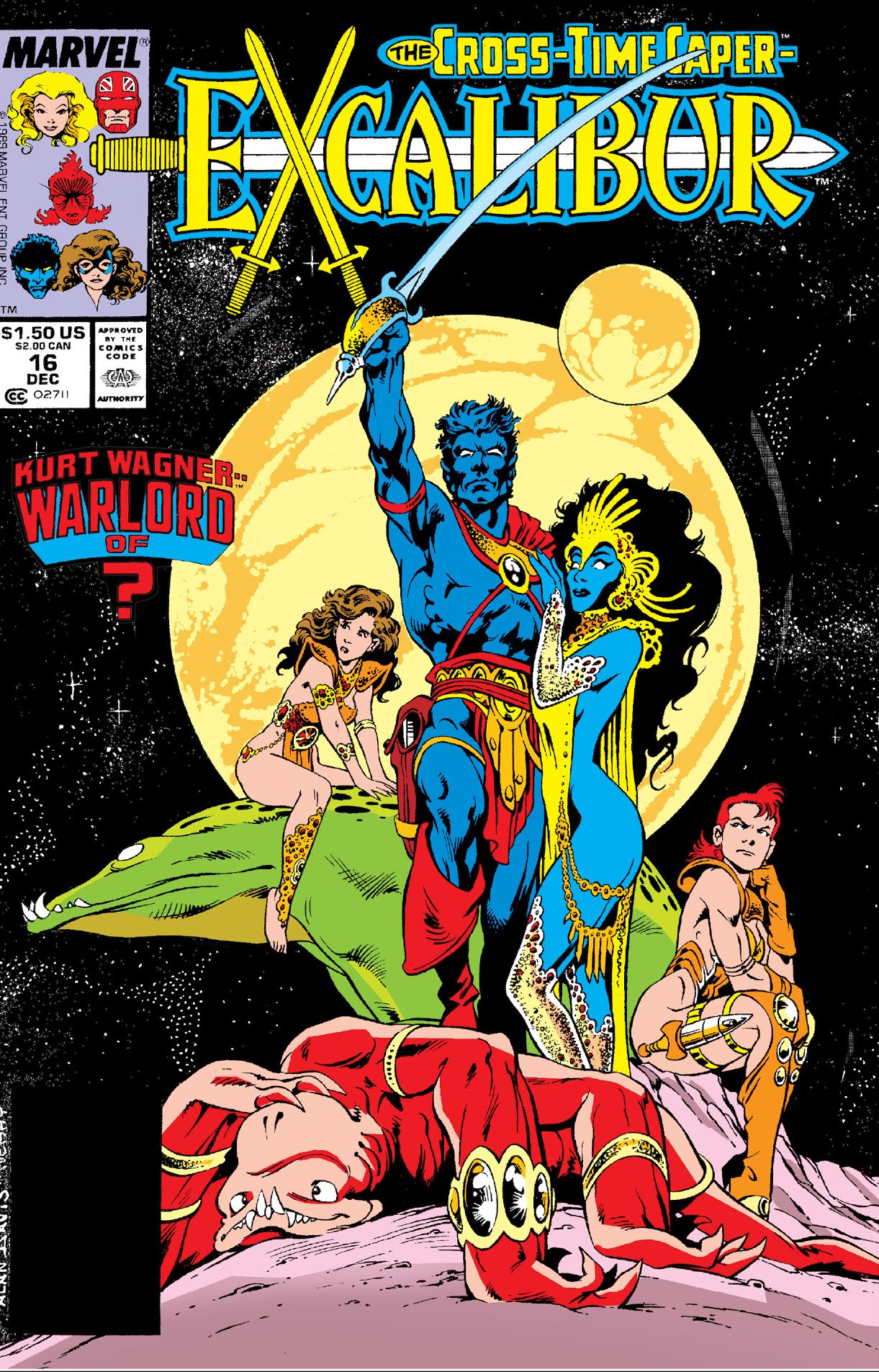
I have no idea how much of this was Mr. Lee's influence, but I've had an on-again, off-again love affair with Marvel comics for a long time. When I was a kid, I wasn't a regular reader because comics were far too juvenile for me. It wasn't until I got to college that I put away the fear of childish things and discovered the joys of Excaliber, mostly through back-issues. (Fans of Planetary Romance would do themselves a favor to track down the justly famous but painfully too short issues 16 and 17. The cover for 16, I think, says all that needs to be said.)

The thing that struck me about Excalibur was that my favorite issues didn't revolve around really cool villains or the "death" of a team member or anything like that. They were most likely to be the more "quiet" issues, where the team never got into costume, but wore their civies and dealt with slightly more mundane issues, like Kitty's birthday or the destruction of the only bathroom (sorry, water closet) in their lighthouse.

And that informed my DMing. Yeah, you knew I was gonna drag this around to RPGs eventually, right? Because it taught me that the most powerful events in the lives of our PCs were not going to be when they won the vorpal blade or defeated the archlich. It was going to be the quiet moments, often those times the players created between themselves, where I just sat and watched, holding the inevitable ninja attack back a few more moments. Because, honestly, if the players are having fun, I'm usually having fun, and if they can entertain themselves with romances and rivalries and jealousy and longing, then heck, I can sit back and enjoy the ride a little bit.

So we had entire sessions where I had little to nothing of any serious consequence planned. Some were given over to parties, often to commemorate recent victories. The players would plan the parties, write up menus and guest-lists, and then we'd play through conversations and events. There might be a drunken fistfight or two, someone would invariably attempt to play match-maker, and usually at least one couple (or trio) would end up disappearing into the bushes. I usually, but not always, dropped in something relating to the next section of the vaguely planned campaign arc.

And everyone had a great time. Granted, you need a special sort of player to pull this off and make it work, and the group needs to be pretty comfortable in their characters and the world. Tying this sort of thing into the customs and rituals of the locals also helps to make the world they live in feel more like a real place, somewhere they can invest emotional and creative energies.

And once they've done that, well, that's when the real magic starts, right?

'Nuff said!

What a Week

Youch.

So I'm ready to jump back into the blogging thing. Lots of things to talk about, what with all the controversy over certain products. At first, I thought I should unleash a thunderous broadside in defense, but more vigorous and stalwart authors than myself have already given good service on Mr. McKinney's behalf. From the somewhat oblique, to the deeply reasoned and considered, to the smack-between-the-eyes-with-a-clue-by-four, just about anything that can be said has been said on this topic. (Though I do have to say, some of us might, possibly, exercise a bit more restraint when it comes to pushing the big shiny red button. Or maybe not.)

I will only add this little word on my own personal experience: the subject matter discussed in Mr. McKinney's book may seem bizarre, hideous, and unusual to you. You are certainly free to not purchase his book or use such material in your games. As for me, I'm what you might call a "High Church" Christian. Thus, while rituals of torment, human sacrifice, and cannibalism might be rare in your life, for me they're just a typical Sunday morning.

But then came life with its broken computers and hacking, nasty colds, and looking for a new job, and so the website languished again, for which I can only offer the usual lame apologies.

In any event, offered in no particular order, here are a handful of gods for my Moldvay/Cook/Labyrinth Lord hack.

Uban

God of Knowledge, the Bronze Man

Uban appears to be an eight-foot tall statue of bronze, with gears and hinges of silver and copper, teeth and nails of jade, and eyes of lapis. His form is beautiful but androgynous, and three “wings” or “feathers”, resembling brilliant white palm fronds or the antennae of a moth, float and undulate around his head like a halo. His voice is sweet, like the ringing of crystal bells, but often lacking in emotional inflection.

His priesthood is charged primarily with the creation and keeping of knowledge. While writing is an old skill, he has given great advances in mathematics to the world. His devotions include meticulous recordkeeping, the writing of journals and histories, and the copying of written works, maps, diagrams, and charts, as is meditation.

His servants are owls, squirrels, and bees. His higher servitors are mechanical versions of these creatures fashioned in bronze, copper, and iron.

His symbol is a bronze lamp or pen nib. His priests wear long, sleeveless robes with pen, ink, paper, and other writing and charting instruments carefully kept in ornate leather belts.

PC clerics of Uban can earn an additional 10% EXP bonus by keeping a journal of their adventures.

Hasrit

Goddess of the Stars, the Dancing Goddess

Hasrit is a tall woman, nearly six-feet tall, curvaceous, with delicate hands and feet, and long, dexterous fingers and toes, each possessing an extra joint. She is usually wearing a short, sleeveless, hooded tunic of black silk over a longer robe with a full circle skirt and broad sleeves in translucent, midnight blue linen. A veil of amber beads held in place by silver chains covers her eyes, which have never been seen by a mortal. Her hair is raven-black and falls to her ankles when unbound.

Hasrit’s priesthood studies the motions of the stars, moons, and sun, and from these observations attempts to divine the past, present, and future. By their rites are the heavenly bodies kept in their proper orbits. These rites revolve around astronomical observations and intricate, whirling dances.

The wolf, rooster, and moth are sacred to her. Her higher servitors are wychlamps. Moonless nights are considered sacred to Hasrit.

A silver star of four greater and four lesser points is her symbol. Hasrit’s priests wear robes with long, bell-shaped sleeves, and from their belts hang long strings of gems, stones, metal chains or ropes that splay out as they dance.

Clerics of Hasrit can turn lycanthropes as if they were undead. Such lycanthropes can never be destroyed, just forced to flee.

Aratshi

The Law-giver, the Judge.

Aratshi appears to be a tall man, nearly seven-and-a-half-feet tall with dark grey eyes and long, silver hair. His clean-shaven features are long and lean, as are his hands, which some have described as spider-like. He’s usually seen wearing either a fringed kilt of red wool belted with a broad girdle of gold, or robes of purple silk. He bears a staff of pale ash capped on either end with gold and iron. The shaft is heavily carved from end to end, inscribed with the core of the law he administers.

Aratshi’s priests dress in accordance with their duties. Those who serve as judges dress in kilts of white wool striped with purple. Enforcers of the law wear sleeveless chain mail over red tunics and bear iron-headed maces. Inquisitors wear long crimson robes. Aratshi’s symbol is a long chain from which hangs a conical stone or weight, to point true to the ground.

The god himself creates the laws; his priesthood is tasked with enforcing them. They concern themselves only with obedience and due punishment. Justice is not their concern. Judgment and punishment are both sacred acts, and smaller devotions are marked by repetition of the law’s preamble, an argument and justification for the importance of the law as a bedrock of any stable civilization.

The hound is sacred to Aratshi, and his greater servitors are the (man-headed bull things which are not in the 1st edition Monster Manual like I thought they were, darn it). The sixth day of every week is considered sacred to Aratshi, as this is when most trials are held.

In civilized lands, the priests of Aratshi carry powerful influence, as they are both admired and feared by the citizens.

Shkeen

God of Slavery, Aratshi’s Hound

Shkeen is closely associated with Aratshi, and it is said that he is in truth a creature of Chaos bound in obedience to Aratshi. That would make him not just the god of slaves, but also the slave god, if it is true.

Shkeen stands just under six feet tall. His body is that of a muscular man with bronzed skin, broad shoulders, and large hands and feet. From the neck up, however, he has the head of a red-furred hound with golden eyes. Around his neck he wears a collar of black dragonscale studded with gold spikes. He wears a kilt of leather stained a deep rust color. He usually bears a staff of venom-green poisonoak shod with iron on either end.

Shkeen is no executioner, though he is a hunter of those who flee justice or their owners. Slavery is a common punishment under Aratshi’s law, and many who are brought to face one of Aratshi’s judges end up in the hands of Shkeen’s priests. They are tasked with marking slaves (usually by branding), breaking them, and then selling them, as well as hunting those who flee from their servitude. While they do not command a monopoly on the slave trade, the priesthood of Shkeen has grown very wealthy in this business. This has lead the priests to branch out into aspects of slavery, including transport, marketing, training, and financing.

The vestments of Shkeen’s priesthood include rust-colored tunics worn with belts of plaited green ropes, heavy bracers of green leather covered with bells that they clash loudly during services, and red dog masks. Shkeen’s symbol is a short length of chain, usually just three links, each incised with the four triangles arranged like the canines of a hound.

Hounds, of course, are sacred to Shkeen, as are gelded bulls. His higher servitors are tamed mammoths and a certain species of giant ant. As with Aratshi, the sixth day of the week is held as sacred.

The transformation of a free person to slave is a sacred rite, as is the manumission of a slave to freedman. Most rites, including smaller, daily devotions, are marked by the repetition of the Hunter’s Oath, said to be the exact same words Shkeen used to pledged his obedience to Aratshi.

Lergan

Goddess of the Underworld, Keeper of the Dead

Lergan is rarely seen in the living world, as she is mistress and governor of Tartarus, the Grey Lands of the deceased. When she does appear in the living world, she is a tall, matronly woman of serious mien, dressed in a gown of black silk, tasseled in crimson and wearing jewelry of silver and bright jewels.

Lergan is not the goddess of death, as the Elder of the Silver Moon, Ushk, holds to that title, and no god has yet been able to wrest that authority from him. Rather, Lergan is the keeper and queen of those who have died and passed into the afterlife. It is said she is barely able to hold on to that title, for the titaness called Grandmother Spider is said to pass freely between Tartarus and the lands of the living, and that the wily crone openly makes her home in Tartarus, in open defiance of Lergan’s claim to dominion.

Lergan’s priesthood, then, is little concerned with executions, burial rites, and the like. Rather, they primarily concern themselves with making sure the dead aren’t wandering about where they’re not supposed to be, specifically the lands of the living. The dead are given reprieve to visit the living world once a year, the day after the autumnal equinox. The day after, the most sacred day of the year for Lergan’s priesthood, the priests go from house to house and search all around to make certain that none of the dead have remained behind. On this day, they may not be denied entrance to any place.

Lergan’s priests dress in grey kilts or robes and wear ivory jewelry. Her symbol is a skull. Rites usually conclude with a dirge-like chant called Lergan’s Welcoming, a reminder that all who live will eventually find themselves in her realm.

Bats and snakes are sacred to Lergan. Certain spirits, those of exceptional devotion or honesty serve her as go-betweens and messengers between her court and the living world.

Priests of Lergan turn undead as if they were two levels higher.

Thursday, October 30, 2008

Massively Multijedi Online RPG

Over two years ago I ranted about why "Babylon 5" was a bad choice for a MMOG. I haven't changed my mind on that. I am willing to alter my views on "Star Trek" which were implied in that article, but I'm not holding my breath.

And now BioWare announces that they're doing a MMOG based on their popular (wildly popular, I'd even say, based on a very informal survey of old gaming friends) Knights of the Old Republic line of computer RPGs. And I'm thinking this may be a good thing.

So what makes "Star Wars" a better property for MMOGing than "Babylon 5"? Unlike the other popular sci-fi franchises, "Star Wars" is unapologetically focused on swashbuckling action. Even Captain Kirk didn't fire up the phasers at the first sign of trouble. But everyone knows a wookie will gladly rip your arms off just for beating it at holographic chess. Firefights and ship battles were cool parts of both "Babylon 5" and "Star Trek" but they were also rare, and generally saved for the climactic episodes that book-ended a season. Such battles and action are close to the heart of "Star Wars". Heck, the animated "Clone Wars" shorts which aired on the Cartoon Network between the "Clone Wars" and "Revenge of the Sith" movies were little more than wall-to-wall action, a loving recreation of the sorts of things we all did with our action figures, way back when.

That all said, the action in the "Star Wars" movies was rarely pointless. This is a subtle but important point; part of why Sony's attempt at a "Star Wars" MMOG stumbled is because killing five minocs and bringing in their left wings doesn't feel like "Star Wars". And changing it to killing five stormtroopers and turning in their helmets doesn't help matters any. Gratuitous murder and pillage doesn't feel like "Star Wars", because the heroes of that franchise don't act like that. Whenever there's a fight, there's a point to it: rescuing the princess, or escaping Cloud City, or breaking into the deflector shield projection array. Killing droids or stormtroopers might need to happen, but it's never the point. In the same way that City of Heroes couldn't blatantly be about killing and looting, a "Star Wars" MMOG also has a fine line to walk between the competing expectations of their audience.

Which makes this promising:

“As an attempt to appeal to a broader and broader audience, consequence has left gaming,” said BioWare co-founder Greg Zeschuk to me after unveiling his MMO this week. “Everything is very low impact and there’s no real negative result that can occur. We’re going to start bringing that back but in a rational way, a way that doesn’t punish the player — but puts them on the spot.”

It'll be interesting to see how this is implimented. The honest truth is, there's a vocal cadre of gamers who squeal in agony when forced to endure anything less than a steady, if slow, improvement in all areas of their online persona. Consequences of any sort are just a lesser version of permanent death, and anything that alters your character irrevocably is to be avoided as unfun. And against that, we have the expectations of BioWare's fans, who enjoy making the tough choices in Mass Effect or pursuing the romantic options in Baldur's Gate.

I think this needle can be threaded, and I think the folks at BioWare are more likely than most to do it, with their reputation for integrating story so strongly in their games. The fact that it's so important to them and, more importantly, their fans means they can't just drop that aspect on the cutting-room floor as deadlines approach and release an almost-good-enough bantha hunting game.

Wednesday, October 29, 2008

Where's That Darn Troll At?

I got this honestly heart-warming email the other day:

I have not played a pen and paper RPG since I was 13 or 14. Man those were great times; I especially miss those summers filled with D&D, backyard wiffle ball double-headers, and bike trips to the comic book store.

In any event, your blog site is awesome and I check it daily. Even without your having new posts, I use your site as the jump off spot to other links like Grognardia, another favorite site of mine.

Keep up the good work and keep posting great stuff!

A-

And then I got that cranky post by mxyzplk. ;)

Yeah, I need to start posting again.

Sorry for the extended absence. Life has been a bit more exciting than I like, and it's kinda sucked all the wind out of my sails. The truth is, I haven't even been reading RPG blogs for the last month or so. So it's more than time to get back into it.

And that said, I may still be a bit of a light blogger since I'm giving serious consideration to NaNoWriMo this year. I'm a good way into a novel and that might be the perfect way to power through and finish a first draft.

In other news, the intriguing 56th page of "Outsider" has been posted.